


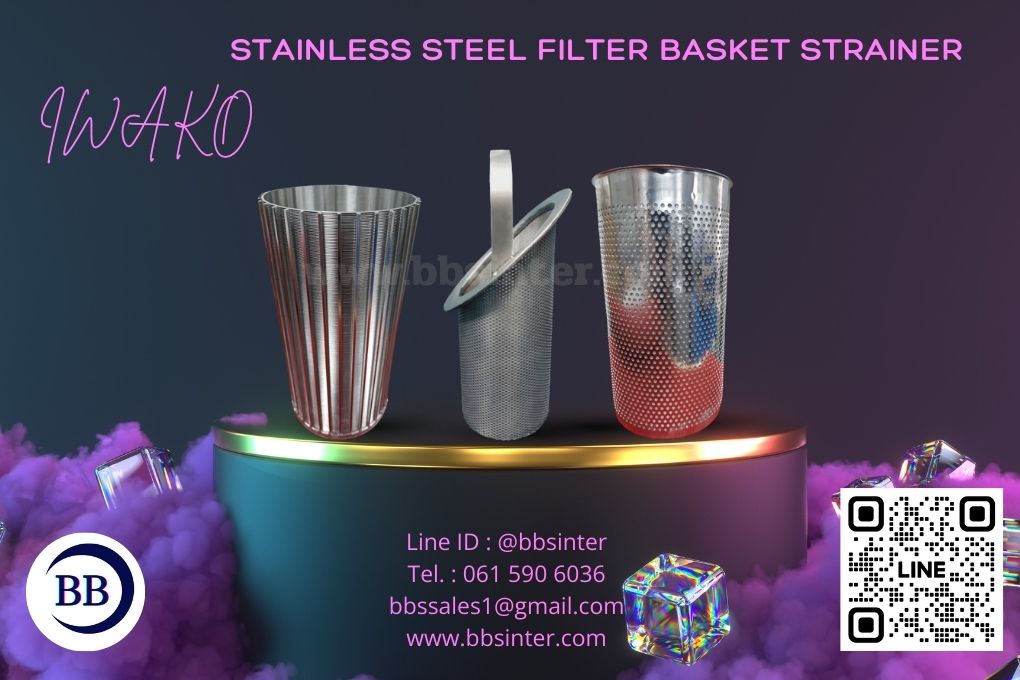
Stainless Steel Screen Mesh Filter for Basket Strainer Industrial
Why Industrial Filtration Matters
In every manufacturing facility, whether in food processing, chemical plants, petrochemical industries, or water treatment systems, one challenge remains constant: unwanted particles in process fluids. Left unchecked, these impurities can accelerate equipment wear, clog pipelines, reduce efficiency, and eventually lead to costly downtime. The solution lies in a robust filtration system, and at the heart of it stands the Stainless Steel Screen Mesh Filter for Strainer industrial.
This filter element is not just a simple accessory. It is the protective shield that safeguards pumps, valves, and downstream equipment, ensuring smooth operation and consistent product quality.
How the Stainless Steel Mesh Filter Works
The stainless steel screen mesh filter is engineered as a basket-shaped insert placed inside a Basket Strainer housing. Unlike disposable filters, it forces all liquid flow through the stainless mesh, effectively trapping unwanted solids. Its design ensures structural stability, tight sealing, and reliable performance even under fluctuating pressure conditions.
The filter body is built around a perforated stainless-steel shell, which serves as a rigid backbone against collapse. Over this structure, layers of woven wire mesh or sintered laminates are applied. These layers determine the retention level, from coarse particle capture to fine filtration. A reinforced rim and handle are added to facilitate quick removal, while precision welds ensure no leakage paths exist. Finally, the filter undergoes pickling and passivation, processes that restore stainless steel’s natural corrosion resistance.
Material Selection for Maximum Durability
Choosing the correct stainless steel grade is critical. For general water, oil, or low-aggressive chemicals, austenitic stainless steel provides excellent corrosion resistance and mechanical toughness. In more demanding environments with chlorides or acidic solutions, molybdenum-alloyed grades are often specified to prevent pitting. For applications that must withstand high temperatures and stress corrosion cracking, Duplex Stainless Steel combines the strength of ferritic structures with the corrosion resistance of austenitic steels.
This tailored approach ensures that each filter matches the process fluid, avoiding premature failure and extending service life.
Filter Media Options and Performance
Not all industrial fluids are the same, and neither are the filters. Mesh configuration defines how efficiently contaminants are captured:
- Plain Weave Wire Mesh: Simple, effective, and easy to backwash.
- Twilled Weave: Provides denser packing for finer filtration and greater stability.
- Dutch Weave and Sintered Laminates: Designed for extremely fine retention and high differential pressure resistance.
For viscous fluids, pleated mesh designs are recommended. They expand the surface area, reduce flow velocity, and delay clogging, which translates into longer operational cycles. In abrasive conditions, heavy-gauge wires or protective outer screens are used to resist wear.
The Role of Sealing in Reliable Operation
Filtration performance is only as strong as its seal. A poorly sealed filter allows bypass, meaning unfiltered fluid can reach critical equipment. Depending on the housing design, sealing can involve flat gaskets, O-rings, or molded collars. The elastomer must be compatible with the process fluid and cleaning chemicals.
- Fluoroelastomers excel with hydrocarbons and higher temperatures.
- EPDM performs well with water and steam.
- PTFE offers the broadest chemical resistance.
A robust seal guarantees that every drop of liquid flows through the mesh and not around it.
Flow Dynamics and Cake Formation
As the filter operates, solid particles accumulate on the mesh surface, forming a layer known as the “filter cake.” While this cake can improve capture efficiency, it also increases differential pressure. Eventually, pressure rise signals the need for cleaning.
Many facilities operate dual Basket Strainer systems to ensure continuous operation—while one filter is being cleaned, the other stays online. For single units, quick-opening covers and sturdy handles make maintenance faster and safer.
Cleaning and Maintenance Best Practices
Cleaning methods vary depending on the fouling mechanism:
- Loose deposits: Simple backwashing or reverse rinsing is sufficient.
- Sticky or polymeric residues: A warm solvent soak followed by low-pressure spray is effective.
- Hard scale or biofilm: Ultrasonic cleaning removes deposits without damaging the mesh.
Post-cleaning, filters must be inspected under bright light to detect broken strands, weld cracks, or distortion. Preventive checks extend filter life and avoid unplanned breakdowns.
Common Failures and How to Prevent Them
Even the toughest stainless steel filters are subject to wear. Typical issues include:
- Mesh tearing due to abrasion.
- Localized buckling from pump surges.
- Seal degradation from thermal cycling.
These problems can be prevented by reinforcing rims, using sturdier support shells, or selecting higher-grade sealing materials. In applications with ferrous particles, installing magnetic bars inside the basket helps capture metallic debris before it reaches the mesh.
Key Factors in Selecting the Right Filter
To specify the best Stainless Steel Screen Mesh Filter for Strainer industrial, engineers must consider:
- Fluid type and chemistry.
- Normal and peak operating temperatures.
- Viscosity range.
- Target particle size retention.
- Expected solids load.
- Acceptable pressure drop in clean and dirty conditions.
- Cleaning methods and compatible chemicals.
- Exact dimensions of the strainer housing.
When these factors are matched, the filter will perform seamlessly, delivering consistent protection and minimizing maintenance costs.
Frequently Asked Questions
Q: What makes stainless steel filters better than disposable options?
A: They are reusable, stronger, and offer reliable performance under pressure and chemical exposure.
Q: Can they handle viscous fluids?
A: Yes. Pleated mesh designs expand the filtration area and maintain efficiency even with thick liquids.
Q: How often should they be replaced?
A: With proper cleaning and inspection, replacement is only necessary when physical damage such as mesh tearing or seal failure is observed.
Conclusion – Why IWAKO Stainless Steel Filters Lead the Way
The Stainless Steel Screen Mesh Filter for Strainer industrial is far more than a passive component. It is the foundation of system reliability, product quality, and operational efficiency. Choosing the right design, material, and sealing solution ensures uninterrupted production and protects critical assets.
For industries that cannot afford downtime, stainless steel filtration is not optional—it is essential.
BB Steel Internationnal for sale Stainless steel used for Filter Strainer : Stainless Steel Mesh Screen for Filter in Basket Strainer , Filter Handle Wheel Washing Basket Strainer , Filter Automatic Strainer , Filter Automatic Backwash Strainer , Filter Duplex Basket Strainer , Filter T Strainer Filter , Filter Y Strainer.
Upgrade your filtration system with Stainless Steel Screen Mesh Filter for Strainer industrial from IWAKO. Contact our team today to receive tailored advice and solutions designed for your plant’s unique challenges.
BB STEEL INTERNATIONNAL
Tel. 061 590 6036
Line ID : @bbsinter
E mail : bbssale1@gmail.com
FACEBOOK บีบี สตีล อินเตอร์เนชั่นแนล
Author Profile

Latest entries
 level gaugeสิงหาคม 24, 2026Industrial Welding Pad Level Gauge Supplier “IWAKO”
 level gaugeสิงหาคม 21, 2026Water Liquid Level Gauge Cock Stainless Steel “IWAKO”
 strainer filterสิงหาคม 17, 2026Automatic water filter used for water treatment
 strainer filterสิงหาคม 17, 2026Automatic self-cleaning filters IWAKO ระบบบำบัดน้ำเสียและน้ำบริสุทธิ์ที่โรงงานไว้วางใจ
