


Difference Duplex Simplex Basket Strainer
Difference Duplex Simplex Basket Strainer : In industrial piping systems, the comparison between a simplex basket strainer and a duplex basket strainer is often misunderstood. The distinction is frequently framed as a question of filtration performance, yet filtration quality is not where the difference lies. When basket size, mesh, and flow conditions are equal, both designs provide the same level of particle removal.
The true distinction is structural and operational. It concerns how the filtration function is embedded into the piping system, how maintenance is executed, and how operational risk is controlled when fouling inevitably occurs. From an engineering standpoint, the choice between simplex and duplex strainers is a decision about system architecture, continuity of operation, and tolerance for interruption, not about how well solids are captured.
1.System Configuration and Flow Path
Simplex Basket Strainer: Single Filtration Point
A simplex basket strainer consists of one pressure body containing a single removable basket. All process fluid flows through this single filtration point. The design is mechanically straightforward: one inlet, one outlet, one basket, one flow path.
When the basket accumulates debris and differential pressure increases, maintenance becomes unavoidable. Cleaning or replacement of the basket requires one of two actions: stopping the flow entirely or isolating the strainer using upstream and downstream valves if the piping layout allows it.
From a system engineering perspective, this configuration defines a clear reality. The strainer is a fixed interruption point in the line. Any maintenance activity directly interrupts flow through that section of the system.
Engineering reality: Maintenance requires interruption of flow.
Duplex Basket Strainer: Parallel Filtration Paths
A duplex basket strainer integrates two separate strainer bodies within a single assembly. At any given time, one strainer operates online while the second remains on standby. A changeover valve or coordinated valve arrangement directs flow through either side.
When the active basket becomes fouled, flow is redirected to the standby strainer without stopping the system. The fouled basket can then be cleaned while the process continues uninterrupted.
This configuration fundamentally changes how filtration interacts with system operation. Filtration remains continuous even during maintenance activities.
Engineering reality: Maintenance can be performed while flow continues.
2. Impact on Operation: Shutdown Versus Continuous Service
Operational Behavior of a Simplex Strainer
A simplex basket strainer is appropriate in systems where shutdown is acceptable and expected. Planned maintenance windows allow the strainer to be isolated, depressurized, and opened without compromising production or safety.
However, fouling does not always follow schedules. When debris accumulates faster than anticipated, differential pressure rises. As pressure loss increases, flow rate decreases. If this condition is not addressed promptly, downstream equipment may be starved of flow or exposed to unstable operating conditions. In systems without bypass provisions, the only corrective action is shutdown.
In this configuration, unexpected fouling translates directly into operational disruption.
Operational Behavior of a Duplex Strainer
A duplex basket strainer is selected when shutdown is not an acceptable response to fouling. In such systems, flow continuity is a core requirement rather than a convenience.
When differential pressure rises across the active basket, the operator switches flow to the standby strainer. This action immediately restores normal flow conditions without interrupting the process. The fouled basket can then be serviced at a controlled pace.
The ability to respond instantly to fouling reduces the likelihood that a localized filtration issue escalates into a forced shutdown.
3. Reliability and Concentration of Operational Risk
Simplex Strainer as a Single Filtration Dependency
In a simplex basket strainer configuration, the piping system relies on a single strainer body, a single basket, and a single filtration path. All process flow passes through this one location. As a result, any condition affecting the basket, sealing components, or pressure boundary directly influences the entire line.
When no bypass arrangement is available, any intervention at the strainer requires the flow to be stopped. Even when isolation valves are installed, restoring normal conditions still involves interrupting flow through that section of piping.
From a reliability perspective, the filtration function is concentrated at one point in the system, with no inherent parallel path to absorb disturbances during maintenance or abnormal conditions.
Duplex Strainer and Distributed Filtration Paths
A duplex basket strainer distributes the filtration function across two separate strainer bodies. Each body provides an independent flow path, allowing one side to remain in service while the other is taken offline for cleaning or inspection.
This arrangement reduces the system’s exposure to interruption at the filtration point, but only when the changeover valve and operating sequence perform as intended. In a duplex configuration, the valve assembly governs how effectively flow is transferred between strainers. Incorrect alignment, incomplete sealing, or improper operation can compromise the intended separation between the two flow paths.
Engineering truth:
A duplex strainer reduces operational risk at the filtration point only when its valve system is mechanically reliable and when changeover procedures are applied with discipline.
4. Maintenance and Safety Considerations
Maintenance Requirements for a Simplex Strainer
Opening a simplex strainer for maintenance requires full isolation from the process. Pressure must be relieved and fluid drained before the cover can be safely removed. These steps are non-negotiable, particularly when handling hot, pressurized, or hazardous fluids.
The result is increased downtime and elevated safety requirements. Maintenance personnel must work within tight schedules, often under pressure to restore flow quickly once isolation begins.
Maintenance Conditions in a Duplex System
In a duplex strainer, maintenance is performed on the offline unit. Only that side is isolated and depressurized, while the system as a whole remains operational. This reduces time pressure on maintenance activities and allows procedures to be executed more deliberately.
Despite this advantage, safety discipline remains essential. Valve positions must be verified before opening any cover, and trapped pressure must be fully relieved. The absence of system shutdown does not eliminate the need for careful isolation of the inactive strainer.
5. Differential Pressure (ΔP) Behavior
From a hydraulic standpoint, there is no inherent difference in pressure loss between simplex and duplex basket strainers when basket geometry, mesh size, and flow rate are identical. The pressure drop across the basket is governed by the same physical principles in both designs.
The distinction lies in how rising differential pressure is managed. In a simplex system, increasing ΔP forces a decision between continued operation with degraded flow or shutdown for maintenance. In a duplex system, increasing ΔP prompts a changeover to the standby strainer.
Key engineering point: Duplex strainers do not reduce pressure loss. They reduce the operational consequences of pressure loss.
6. Cost, Footprint, and System Complexity
Simplex Strainer Characteristics
A simplex basket strainer has lower capital cost, a smaller footprint, and fewer components. Installation, commissioning, and operation are comparatively simple. For systems with predictable fouling and acceptable shutdowns, this simplicity is often an advantage.
Duplex Strainer Characteristics
A duplex basket strainer requires two pressure bodies and a valve system. This increases cost, weight, and space requirements. More components mean more maintenance considerations and a need for defined operating procedures and training.
The added complexity is justified only when system continuity outweighs these disadvantages.
Engineering Summary: Basis for Selection
A simplex basket strainer is appropriate when the system can be stopped, fouling rates are low or predictable, and simplicity is a priority. Its limitations are acceptable when operational interruption does not introduce unacceptable risk.
A duplex basket strainer is justified when continuous operation is required, when shutdown leads to production loss or safety concerns, and when debris loading is variable or uncertain. In such systems, the strainer functions not merely as a filtration device but as a risk-control element within the piping design.
For systems where filtration choice directly affects uptime and operational risk, technical evaluation is essential.
If your application involves Industrial Duplex Basket Strainer IWAKO, Duplex Basket Strainer Carbon Steel, or Duplex Basket Strainer Stainless Steel, a system-level review of operating conditions and maintenance strategy can clarify whether a duplex or simplex configuration is technically justified.
🏣 BB STEEL INTERNATIONNAL
☎️ Tel. 061 590 6036
🆔Line ID : @bbsinter ( https://lin.ee/BKzpb1L )
📧E mail : bbssale1@gmail.com
🌐: www.bbsinter.com
Author Profile
Latest entries
 level gaugeสิงหาคม 24, 2026Industrial Welding Pad Level Gauge Supplier “IWAKO”
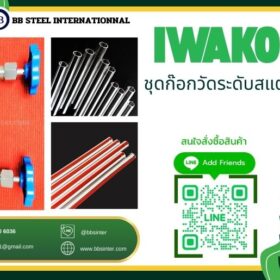 level gaugeสิงหาคม 21, 2026Water Liquid Level Gauge Cock Stainless Steel “IWAKO”
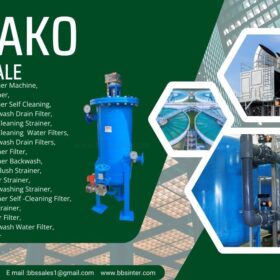 strainer filterสิงหาคม 17, 2026Automatic water filter used for water treatment
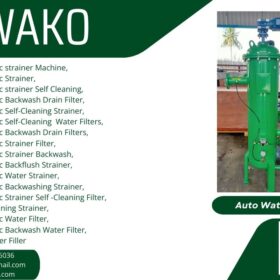 strainer filterสิงหาคม 17, 2026Automatic self-cleaning filters IWAKO ระบบบำบัดน้ำเสียและน้ำบริสุทธิ์ที่โรงงานไว้วางใจ

