


Types of Basket Strainers
Types of Basket Strainers : Basket strainers are not classified by appearance or external configuration. In real plant environments, they are classified by system logic, maintenance method, and operational continuity requirements.
The correct type selection is not a product decision. It is a system decision.
There are four primary type of basket strainers used in industrial piping systems:
-
Simplex Basket Strainer
-
Duplex Basket Strainer
-
Automatic Basket Strainer
-
Manual Brush Washing Basket Strainer
Each type exists because the operating condition of the system demands it. The difference between them is structural and operational. The consequences of selecting the wrong type are system shutdown, increased maintenance risk, or unstable operation.
Below is a structured engineering explanation of each type.
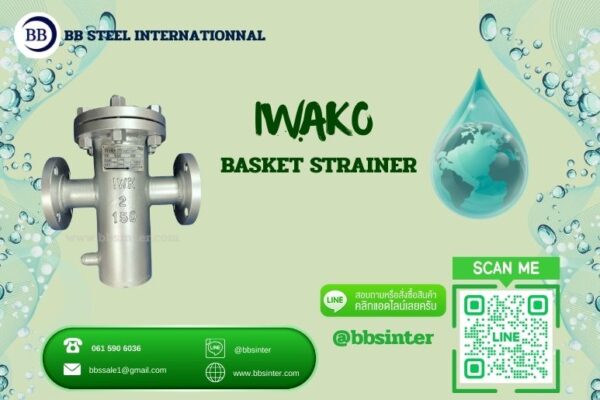
1)Simplex Basket Strainer
Structural Configuration
-
One housing
-
One basket
This is the most direct basket strainer configuration. The filtration function is performed by a single internal basket installed inside one pressure body.
Operating Principle
Only one filtration chamber is available. When the basket becomes loaded and requires cleaning, the system must:
-
Stop operation, or
-
Rely on an external line bypass
There is no internal redundancy.
Engineering Logic
The Simplex Basket Strainer is selected only when the system logic allows downtime, or when a bypass line is already integrated into the piping layout.
This type exists because some systems can tolerate interruption. If the process allows shutdown during maintenance, the single-basket design is mechanically sufficient.
Maintenance Method
Maintenance requires:
-
Opening the cover
-
Lifting the basket
-
Cleaning or replacing the basket
The system is directly exposed during this activity. Therefore, operational planning is required before servicing.
Engineering Consequence
If the process cannot stop, this type becomes a risk. If downtime is acceptable, this type remains mechanically rational and straightforward.
Simplex Basket Strainer = Single unit, shutdown required during cleaning.

2) Duplex Basket Strainer
Structural Configuration
-
Two housings
-
Two baskets
-
Valve system for flow changeover
This design introduces redundancy into the filtration system.
Operating Principle
Flow can be redirected from one basket chamber to the other. While one side remains in operation, the other side can be isolated and cleaned.
Continuous filtration is maintained.
Engineering Logic
The Duplex Basket Strainer exists because certain systems cannot stop. The requirement is clear:
-
No line shutdown
-
Online maintenance required
The engineering decision shifts from “Can we stop?” to “Can we switch safely?”
The system risk does not disappear. It moves.
The primary engineering focus becomes:
-
Proper flow switching
-
Correct isolation of the cleaning side
-
Stable operation during changeover
The reliability of the process depends on correct operation of the switching mechanism.
Maintenance Method
-
Isolate one side
-
Open cover
-
Remove and clean basket
-
Return side to standby
The second basket continues filtering during this time.
Engineering Consequence
This type is used when process continuity is mandatory. It prevents production interruption but introduces operational control requirements during switching.
Duplex Basket Strainer = Dual units, continuous operation through changeover.
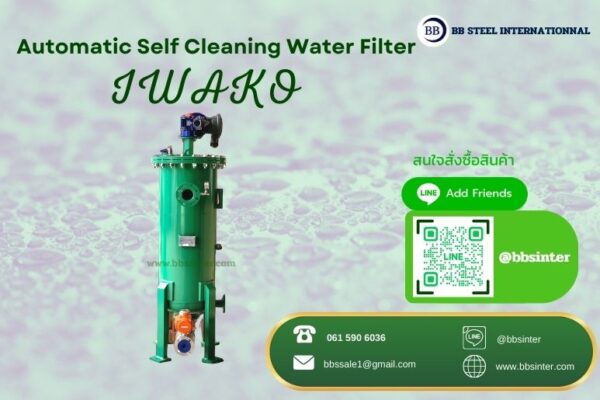
3) Automatic Basket Strainer
(Self-Cleaning / Automatic Cleaning Type)
Structural Configuration
-
Basket or filtration element inside housing
-
Integrated automatic cleaning mechanism
-
Typically includes a control system
The defining feature is not the basket. It is the cleaning mechanism.
Operating Principle
Cleaning occurs automatically based on predefined operating conditions. The system does not require frequent manual opening of the housing.
The basket remains in place while cleaning is executed.
Engineering Logic
This type is selected under the following conditions:
-
High debris load
-
Frequent cleaning required
-
Reduced reliance on manual labor
The engineering objective is operational stability. Instead of stopping or manually intervening repeatedly, the system maintains filtration capacity through controlled automatic cleaning cycles.
The goal is to preserve filtration performance while minimizing:
-
Shutdown frequency
-
Manual intervention
This type reduces dependence on maintenance personnel for routine cleaning events.
Maintenance Impact
Manual opening of the housing becomes less frequent. System filtration capability remains consistent over time because cleaning is integrated into operation.
Engineering Consequence
This design addresses high-maintenance environments. It is not selected for redundancy. It is selected for sustained filtration performance under repetitive loading conditions.
Automatic Basket Strainer = Self-cleaning mechanism reduces manual shutdown and intervention.

4) Manual Brush Washing Basket Strainer
(Manual Cleaning by Brush)
Structural Configuration
-
Basket installed inside housing
-
Integrated brush mechanism
-
Manual actuation
This type introduces a mechanical cleaning device but remains manually operated.
Operating Principle
Instead of removing the basket every time debris accumulates, an operator activates the brush mechanism to wipe the basket surface.
The basket remains inside the housing during this cleaning process.
Engineering Logic
This design exists between Simplex and Automatic systems.
It is selected when:
-
Opening the cover frequently is undesirable
-
Full automatic cleaning is not required
-
Investment in automation is not justified
The brush mechanism reduces the frequency of full disassembly while keeping the system mechanically simple.
Maintenance Method
-
Activate brush mechanism manually
-
Dislodge accumulated debris
-
Avoid immediate basket removal
However, manual intervention is still required. It is not an automated system.
Engineering Consequence
This type reduces maintenance time compared to a standard Simplex Basket Strainer but does not eliminate operator involvement.
It is a controlled compromise between full manual removal and automatic cleaning.
Manual Brush Washing Type = Manual cleaning mechanism reduces cover opening frequency.

Final Engineering Perspective
The different types of basket strainers are not alternatives in marketing terms. They are responses to system requirements.
Selection must answer one fundamental question:
Can the system stop for cleaning?
If yes — Simplex is mechanically sufficient.
If no — Duplex becomes necessary.
If cleaning frequency is high — Automatic cleaning stabilizes operation.
If moderate reduction in maintenance effort is required — Manual brush washing provides an intermediate solution.
The type of basket strainer is defined by how the plant intends to manage maintenance, continuity, and operational risk.
There is no universal solution. There is only system logic.
Engineering Consultation
If your system requires continuous filtration without shutdown, or you are evaluating upgrade paths between Simplex and automated cleaning configurations, technical discussion is recommended.
We can support specification review and application evaluation for:
-
Industrial Duplex Basket Strainer “IWAKO”
-
Duplex Basket Strainer Carbon Steel
-
Duplex Basket Strainer Stainless Steel
Engineering decisions should be made based on operational continuity, maintenance strategy, and system control capability.
🏣 BB STEEL INTERNATIONNAL
☎️ Tel. 061 590 6036
🆔Line ID : @bbsinter ( https://lin.ee/BKzpb1L )
📧E mail : bbssale1@gmail.com
🌐: www.bbsinter.com
Author Profile

Latest entries
 level gaugeสิงหาคม 24, 2026Industrial Welding Pad Level Gauge Supplier “IWAKO”
 level gaugeสิงหาคม 21, 2026Water Liquid Level Gauge Cock Stainless Steel “IWAKO”
 strainer filterสิงหาคม 17, 2026Automatic water filter used for water treatment
 strainer filterสิงหาคม 17, 2026Automatic self-cleaning filters IWAKO ระบบบำบัดน้ำเสียและน้ำบริสุทธิ์ที่โรงงานไว้วางใจ
