


Industrial Sight Glass Brass “IWAKO”
Industrial Sight Glass Brass “IWAKO” : On a busy line, nothing beats a direct view. A brass oil level indicator gives exactly that: a clear window into the condition and level of lubricants without wiring, sensors, or calibration drift. The device anchors into a tank or housing with a brass body that threads smoothly and holds a seal, and it presents the operator with either a compact window or a full tubular column. Together these options form a toolkit often labeled Sight Glass Level Gauge industrial, a set of visual instruments that turn routine checks into quick, confident decisions.
The Anatomy That Keeps Operators Informed
The viewing element is typically borosilicate glass chosen for optical stability, scratch resistance, and thermal shock tolerance. In a bull’s-eye configuration, the glass sits flush in the brass body with an elastomer gasket that maintains compression. In a tubular configuration, the glass runs between upper and lower connections with brass gauge cocks that allow isolation, venting to remove trapped air, and draining for inspection. A red-line tube can be specified to produce a crisp reference that makes the meniscus stand out even against dark oils or in low ambient light.
Where a Brass Oil Level Indicator Belongs On Your Line
Consider gearboxes on conveyors, mixers, or extruders where a clear level after shutdown prevents premature bearing wear. Think about hydraulic power units and lubrication skids where fluid expansion and consumption need to be tracked visually through a communicating column. Look at compressors and pumps where a glance reveals whether the sump is healthy or starting to foam. In each of these scenarios the indicator enables early detection of issues, buying time for corrective action before minor anomalies become costly downtime.
Choosing Materials and Seals With Intention
The best results come from matching materials to the medium and environment. Brass hardware provides non-sparking service and a forgiving thread interface that does not seize under normal maintenance. Borosilicate glass maintains clarity under cycling temperatures and resists clouding. Seal materials must be compatible with the oil family and additive chemistry so that compression does not relax over time. In humid air or coastal settings, a dezincification-resistant brass grade or selective stainless components protect both appearance and structure without changing how the indicator reads.
Installation Notes That Prevent Headaches
Mount the indicator in a location with enough light and line of sight for safe checks. Ensure the seating faces are clean and flat, and apply a thread compound that will not attack elastomers. For tubular sets, open the vent briefly during startup to let the column equalize with the tank and to clear bubbles that can mask the real level. Fit guards around exposed glass in high-traffic corridors or near moving parts. Keep spans short on vibrating equipment and use cushioned supports so the glass is not forced to absorb dynamic loads.
Maintenance That Actually Improves Reliability
Inspection is fast because the device is visual by design. During rounds, scan for level first, then assess color, clarity, and foam. If clouding or film appears on the glass, isolate the column, drain, and clean with a compatible solvent and lint-free wipes. Replace gaskets if they show flattening or chemical swell, and tighten fasteners in a cross pattern to restore even compression. When the reading seems sluggish or inconsistent, verify that the lower connection is not fouled and that the vent is free to breathe during equalization.
When to Step Beyond Level and Look Inside
Some processes ask for more than a reading. A borosilicate disc sight glass mounted on a weld pad or a flange lets operators see the product itself: color, clarity, flow regime, and the presence of solids. This does not replace the oil level gauge but complements it, especially in applications where cleanliness and phase behavior must be confirmed at a glance. The same attention to sealing and material compatibility applies, with the brass hardware acting as a robust frame that resists thread damage and maintains preload on the gaskets.
Safety and Human Factors
Visual devices only help if people can read them easily and safely. Place the indicator where posture is neutral and reach is comfortable. Use a red-line tube or a contrasting backplate where light is limited. Add labels that define normal bands so readings are interpreted consistently across shifts. Train technicians to use the gauge cocks correctly so isolation and venting are done in a controlled sequence, and remind them to bring the column back online slowly to avoid hydraulic shock.
FAQ
Is a brass oil level indicator suitable for synthetic oils?
Yes, when seals and gaskets are selected for the specific fluid family, borosilicate glass and brass hardware perform well with many synthetic formulations.
What is the role of the gauge cocks in a tubular sight glass?
They allow isolation of the column, controlled venting to remove trapped air, and safe draining during inspection or replacement.
How can readability be improved on dark oils?
A red-line tube or a contrasting backplate behind the glass makes the meniscus stand out, improving confidence in low-light conditions.
Bring certainty to daily checks with a brass oil level indicator tailored to your medium and environment. Reach out for a Sight Glass Level Gauge industrial specification that balances readability, safety, and maintenance speed across your critical assets.
🏣 BB STEEL INTERNATIONNAL
☎️ Tel. 061 590 6036
🆔Line ID : @bbsinter
📧E mail : bbssale1@gmail.com
FACEBOOK บีบี สตีล อินเตอร์เนชั่นแนล
Author Profile

Latest entries
 level gaugeสิงหาคม 24, 2026Industrial Welding Pad Level Gauge Supplier “IWAKO”
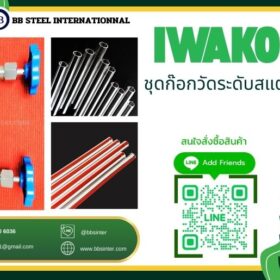 level gaugeสิงหาคม 21, 2026Water Liquid Level Gauge Cock Stainless Steel “IWAKO”
 strainer filterสิงหาคม 17, 2026Automatic water filter used for water treatment
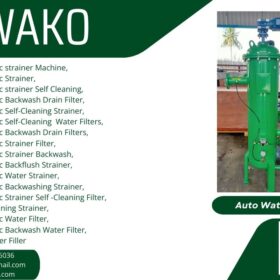 strainer filterสิงหาคม 17, 2026Automatic self-cleaning filters IWAKO ระบบบำบัดน้ำเสียและน้ำบริสุทธิ์ที่โรงงานไว้วางใจ
