


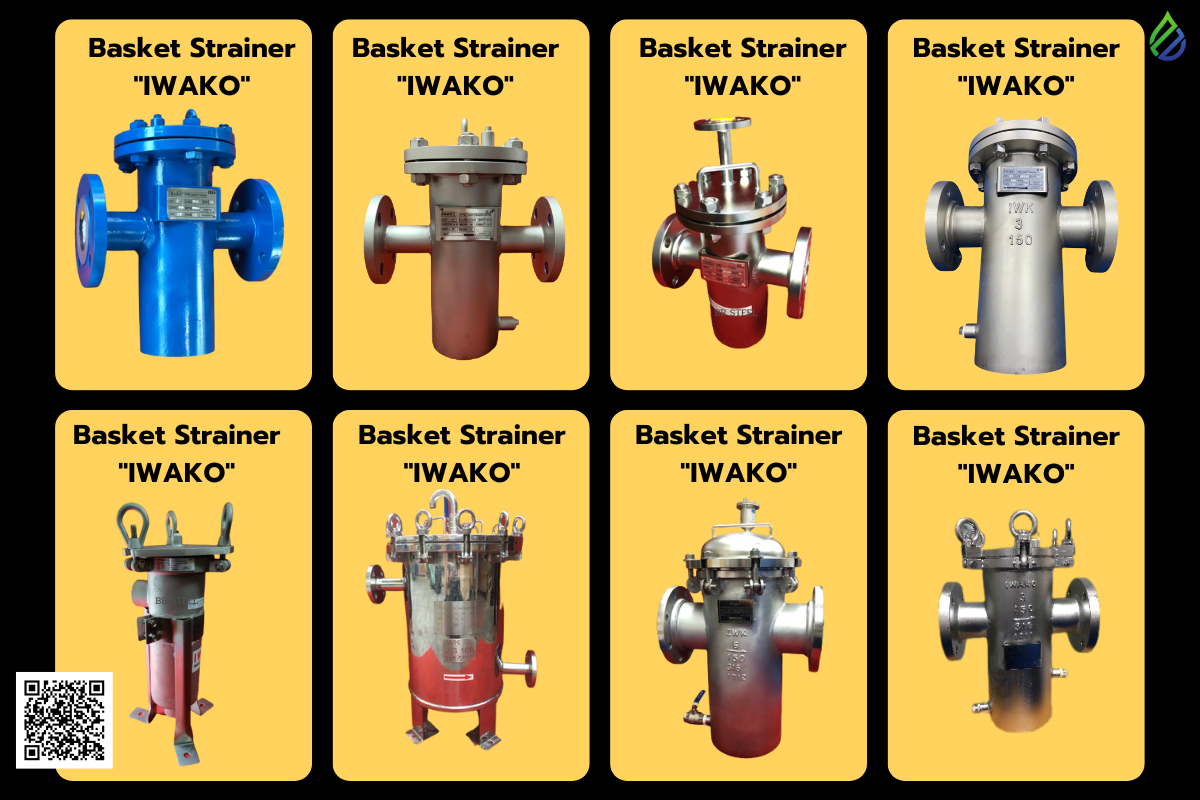
Basket Strainer Global Supplier
Basket Strainer Global Supplier : A basket strainer is a strainer-type filtration device intended for coarse separation and foreign-material protection. It uses a cylindrical “basket element” installed inside a housing to capture solid particles carried by a flowing fluid. The engineering intent is not to “clean the fluid to a process purity level,” but to protect the system from damage caused by solids that should not reach downstream equipment.
From a system perspective, the basket strainer is positioned as a protection barrier. It is installed so that solids are intercepted in a controlled, serviceable location. This is a deliberate engineering decision: instead of letting random locations in the system become the point of accumulation or blockage, the basket strainer concentrates the risk into a housing designed to be opened and cleaned.
What is a basket strainer for function?
In practice, the function of a basket strainer is best described through cause–effect logic. Its value is not theoretical; it is defined by what happens when solids are allowed to move downstream.
1) Protect downstream equipment from solids damage
Industrial fluids can carry foreign materials such as weld slag, rust, scale, gasket debris, sand, and sediment. If these solids reach downstream equipment, the failure modes are predictable:
-
Pumps and seals experience wear.
-
Valves may not shut properly, and seats can be damaged.
-
Nozzles, orifices, and spray devices can clog.
-
Heat exchangers can become blocked on the tube side, and pressure drop increases.
-
Instruments such as flow meters and control valve trims can behave incorrectly.
A basket strainer functions as a “front-line barrier” that receives contamination so the equipment does not. It does not eliminate the existence of solids in the system; it intercepts them before they become a mechanical problem.
2) Force plugging risk to occur where it can be managed
If the system accepts that some solids will exist, the engineering choice is not whether plugging risk exists; it is where that risk is allowed to accumulate.
A basket strainer forces accumulation to occur inside its housing. This matters because the housing is intentionally designed for opening and cleaning. The system is therefore managed: the solids are not allowed to choose the location of the restriction. The design assigns that location.
3) Reduce downtime by converting failures into routine maintenance
When solids are not intercepted, maintenance tends to be “breakdown work.” A basket strainer changes that dynamic by making cleaning accessible. In system terms, it converts intervention from an unplanned event into routine work by placing the solids in a serviceable component rather than inside equipment that is expensive or difficult to restore.
What is basket strainer working principle?
The working principle of a basket strainer is size-based separation, also referred to as size exclusion or screening. This principle is simple but the system behavior matters.
Mechanical sequence of operation
-
Fluid enters the housing.
-
The flow is forced to pass through the openings of the basket element.
-
Solid particles larger than the opening are retained on or within the basket.
-
The screened fluid exits downstream.
This mechanism is purely physical: the basket element acts as the barrier, and the housing positions that barrier in the flow path.
What changes as solids accumulate
In real operation, solids do not disappear after capture. They accumulate in the basket. As accumulation increases, the open area of the strainer element decreases. When open area decreases, the resistance to flow increases, and pressure drop across the strainer rises. The system consequence is straightforward: higher pressure drop affects flow delivery to downstream users and changes operating behavior of connected equipment.
Because of this, a basket strainer is not a “install and forget” component. It is a component that must be serviced. The engineering point is not to claim it lasts indefinitely, but to control how and where the solids are handled.
What a basket strainer is used for in industrial plants?
A basket strainer is used when the system goal is to intercept solids and protect downstream equipment. Typical application logic is based on what the downstream equipment cannot tolerate, and where solids are most likely to cause failure or performance loss.
A) Pump suction or upstream of sensitive equipment
Basket strainers are commonly installed on pump suction lines or before sensitive equipment to prevent solids from entering components that wear or clog. This is especially relevant during start-up or after piping work, when solids such as debris and residues are more likely to be present.
They are also used to reduce plugging or wear risk for control valve trims and flow meters. In these locations, a single piece of debris can cause incorrect behavior, unstable control, or measurement error. The strainer becomes the first protective step in preventing those consequences.
B) Upstream of nozzles, spray headers, and small openings
Systems that include nozzles, spray headers, burner tips, or orifice lines are vulnerable because small openings can be disrupted by a single particle. In these services, the basket strainer is selected to intercept solids before they reach the restriction. The cause–effect relationship is direct: solids pass through → small opening clogs → system function deviates.
C) Upstream of heat exchangers or equipment that is hard to clean
Heat exchangers can be blocked by scale or debris on the tube side, which increases pressure drop and creates maintenance events that tend to be time-consuming. Installing a basket strainer upstream is a system choice intended to prevent the exchanger from becoming the collection point for solids. This reduces the likelihood of a large cleaning job and the associated downtime.
D) Water and industrial fluids expected to carry sediment
Basket strainers are used in cooling water, service water, seawater (in some plants), raw water, and recycled fluids where sediment or solids are expected. The underlying logic is simple: if the system accepts that fluid will not be clean, then a protective barrier is required to prevent uncontrolled deposition and equipment damage.
Types of basket strainers and what the type selection implies
Basket strainers are not a single configuration. The type is a system decision because it determines how the strainer can be cleaned and how interruption to operation is handled. The following types are used:
1) Simplex basket strainer
A simplex basket strainer is a single strainer body with one basket element. Its implication is that cleaning is performed on that single element location.
2) Duplex basket strainer
A duplex basket strainer is a duplex configuration. Its implication is that the system has a duplex arrangement rather than a single strainer body.
3) Automatic basket strainer
An automatic basket strainer is an automatic configuration. Its implication is that the strainer type is selected for automatic handling rather than a purely manual approach.
4) Manual brush washing basket strainer
A manual brush washing basket strainer is a manual configuration that uses brush washing as the cleaning approach. The implication is that cleaning is performed through manual brush washing rather than only by removing the element for cleaning.
Type selection is not a label exercise. It affects how solids are removed, how maintenance is performed, and how the system behaves during cleaning activity.
Summary:
A basket strainer is an engineered location for solids capture. It is used to protect equipment, force plugging risk into a controllable component, and reduce downtime by making solids handling routine rather than corrective. Its working principle is size exclusion: the fluid must pass through the basket openings, and solids larger than those openings are retained.
In industrial piping, the question is rarely “will solids exist.” The real question is whether the system chooses a controlled interception point or leaves solids to act unpredictably. A basket strainer is the controlled interception point.
If you are selecting or applying an Industrial Duplex Basket Strainer “IWAKO”—including Duplex Basket Strainer Carbon Steel or Duplex Basket Strainer Stainless Steel—share your system context and constraints. We can discuss how the strainer role fits your protection strategy and maintenance approach.
🏣 BB STEEL INTERNATIONNAL
☎️ Tel. 061 590 6036
🆔Line ID : @bbsinter ( https://lin.ee/BKzpb1L )
📧E mail : bbssale1@gmail.com
🌐: www.bbsinter.com
Author Profile
Latest entries
 level gaugeสิงหาคม 24, 2026Industrial Welding Pad Level Gauge Supplier “IWAKO”
 level gaugeสิงหาคม 21, 2026Water Liquid Level Gauge Cock Stainless Steel “IWAKO”
 strainer filterสิงหาคม 17, 2026Automatic water filter used for water treatment
 strainer filterสิงหาคม 17, 2026Automatic self-cleaning filters IWAKO ระบบบำบัดน้ำเสียและน้ำบริสุทธิ์ที่โรงงานไว้วางใจ

