


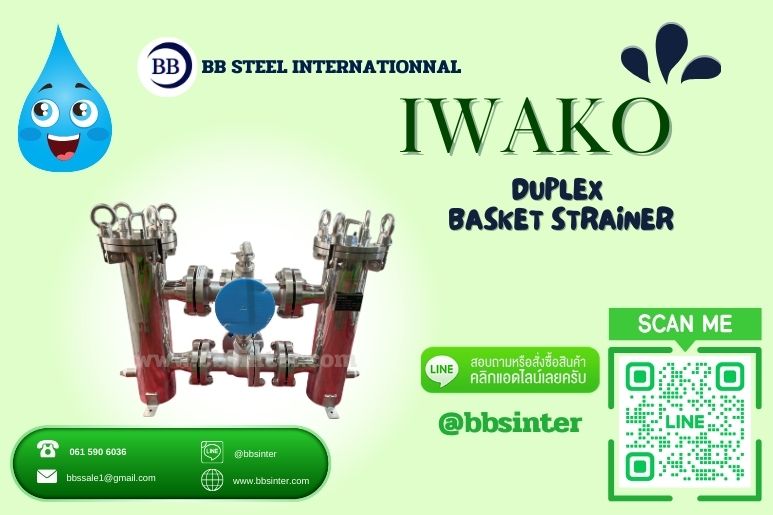
Duplex Strainer installation Chemical dosing
Duplex Strainer installation Chemical dosing : Installation of a Duplex Strainer for Protection of Chemical Dosing and Injection Systems. In chemical dosing and injection systems, a duplex strainer is installed for one purpose only: system protection. It is not intended for product polishing or quality improvement. Its function is to prevent mechanical disruption in sensitive dosing components while maintaining continuous operation during maintenance or clogging events.
The engineering requirement is direct and uncompromising. The installation must satisfy two conditions simultaneously:
-
Prevent solid contaminants from reaching critical downstream components.
-
Allow uninterrupted chemical dosing when one basket requires cleaning.
A duplex strainer achieves this by providing two independent filtration paths within a single assembly. Flow can be redirected from one chamber to the other without stopping the line. In dosing and injection services, where flow interruption directly affects process stability, this ability defines the engineering justification for the configuration.
System-Level Protection Objective
In dosing and injection lines, the most vulnerable elements are those with small internal passages or restriction-based flow control. These typically include:
-
Devices with small internal clearances
-
Flow control elements
-
Check valves
-
Injection quills or nozzles
-
Restriction-based metering components
The failure mechanism is simple and repeatable:
-
Solid particles enter the line.
-
They migrate to the smallest restriction.
-
Accumulation occurs.
-
Local blockage develops.
-
The dosing rate deviates from its intended setpoint.
The deviation may not be immediately visible. However, the consequences can include underdosing, overdosing, corrosion control failure, scaling, or broader process instability.
For this reason, a duplex strainer must be installed upstream of the first component that cannot tolerate solid intrusion. This is not a matter of convenience or accessibility. It is a direct cause–effect decision based on mechanical vulnerability.
Installation Philosophy: Location and Functional Intent
1. Positioning for Maximum Protection
The installation location must ensure that:
-
All potential solid contaminants are intercepted before reaching critical downstream elements.
-
No bypass path exists that would allow unfiltered flow to compromise protection.
The primary selection criterion is the protection of the most sensitive component in the line. Accessibility is secondary.
However, maintenance practicality cannot be ignored. A protection device that cannot be serviced safely and predictably will eventually be bypassed in operation. Once bypassed, its protection function no longer exists. Therefore, installation must balance protection priority with realistic service access.
2. Avoid Introducing Flow Instability
Every strainer introduces pressure loss. As debris accumulates inside the active basket, differential pressure increases progressively.
If the dosing system is sensitive to pressure variation, this rising restriction can influence actual injection flow before the operator performs a basket changeover. In such systems, progressive clogging can create dosing deviation even before complete blockage occurs.
Installation must therefore support:
-
Detection of when the active basket approaches unacceptable restriction.
-
Timely changeover before dosing deviation becomes operationally significant.
The duplex strainer must not become a source of instability while protecting downstream components. Protection without stability is incomplete protection.
3. Redundancy in Duplex Design — Conditional Reliability
A duplex strainer introduces two filtration chambers. On paper, this provides redundancy. In practice, redundancy is conditional.
Reliability improves only if:
-
The changeover valve assembly seals correctly.
-
Switching aligns fully with the intended flow path.
-
Operational procedures are executed as designed.
-
The valve mechanism remains mechanically sound.
Within this configuration, the changeover valve becomes the critical reliability element. If it fails to seal, if alignment is incomplete, or if switching is performed incorrectly, the expected benefit of dual chambers disappears. The system retains mechanical complexity but loses functional redundancy.
Engineering reality is clear: a duplex strainer reduces operational interruption risk only when the switching mechanism performs precisely as intended.
4. Installation Requirements to Enable Safe Changeover
The design intent of a duplex strainer is to allow one basket to be cleaned while flow continues through the other chamber. Installation must translate this intent into reliable operation.
The system must allow:
-
Clear identification of which chamber is in service.
-
Safe isolation of the idle chamber.
-
Removal and cleaning without leakage or unintended air ingress, where relevant to system conditions.
-
Changeover without flow interruption or pressure shock.
The objective is not merely continuity of flow. The objective is controlled continuity. Switching must not introduce transient conditions that disturb dosing accuracy or create mechanical stress within the system.
If the act of switching produces instability, then the installation does not fulfill its engineering purpose.
5. Post-Installation Engineering Verification
Installation completion is not validated by the absence of leakage alone. A duplex strainer in a dosing or injection system must undergo system-level verification.
Verification should confirm:
-
Full and correct valve positioning during changeover.
-
No cross-flow or partial internal leakage between chambers.
-
Stable dosing performance throughout switching operations.
-
Safe and practical basket removal under actual operating conditions.
If changeover causes pressure disturbance, dosing fluctuation, or operator hesitation due to mechanical uncertainty, the installation does not fully achieve its protection objective.
Protection is proven by stable performance during both normal operation and maintenance transitions.
Conclusion
In chemical dosing and injection systems, a duplex strainer is a protection device with continuity capability. It is not an accessory and not a convenience feature.
Its function is exact:
-
Intercept solids before they reach small-clearance downstream components.
-
Maintain uninterrupted chemical dosing during basket maintenance.
-
Prevent the filtration stage from becoming a single operational constraint.
When installed with correct system intent—proper upstream placement, reliable changeover alignment, and operationally verified switching—the duplex strainer performs its role without introducing additional system risk.
The engineering outcome is not simply cleaner fluid. The outcome is controlled dosing, protected components, and continuity under maintenance conditions.
If you are evaluating a duplex strainer for dosing or injection protection, the discussion should focus on system behavior during changeover, not only nominal filtration capacity.
For technical consultation regarding the Industrial Duplex Basket Strainer “IWAKO”, Duplex Basket Strainer Carbon Steel, or Duplex Basket Strainer Stainless Steel, engage with our engineering team to review your installation logic and changeover requirements before final specification.
🏣 BB STEEL INTERNATIONNAL
☎️ Tel. 061 590 6036
🆔Line ID : @bbsinter ( https://lin.ee/BKzpb1L )
📧E mail : bbssale1@gmail.com
🌐: www.bbsinter.com
Author Profile
Latest entries
 level gaugeสิงหาคม 24, 2026Industrial Welding Pad Level Gauge Supplier “IWAKO”
 level gaugeสิงหาคม 21, 2026Water Liquid Level Gauge Cock Stainless Steel “IWAKO”
 strainer filterสิงหาคม 17, 2026Automatic water filter used for water treatment
 strainer filterสิงหาคม 17, 2026Automatic self-cleaning filters IWAKO ระบบบำบัดน้ำเสียและน้ำบริสุทธิ์ที่โรงงานไว้วางใจ

