


How do you filter industrial waste water?
How do you filter industrial waste water? : Filtering industrial wastewater is a complex process designed to remove contaminants and pollutants before the water is either discharged into the environment or reused within the industry. The exact steps involved depend on the type and concentration of contaminants, as well as the specific regulations governing wastewater discharge. Below is a general outline of how industrial wastewater is filtered:
1. Preliminary Treatment
Screening: Large debris such as rags, plastics, and other solid materials are removed using coarse screens or mesh filters to protect downstream equipment from damage and clogging.
Grit Removal: Grit chambers or sedimentation tanks are used to remove heavy particles like sand, gravel, and small stones, which can settle quickly and are abrasive to mechanical parts.
2. Primary Treatment
Sedimentation: The wastewater is allowed to sit in large tanks where suspended solids can settle to the bottom as sludge. The settled sludge is then removed for further treatment or disposal.
Chemical Coagulation and Flocculation: Chemicals (coagulants) are added to the wastewater to cause small particles to clump together into larger aggregates, known as flocs. These flocs can then be removed through sedimentation or filtration.
3. Secondary Treatment
Biological Treatment: This process involves using microorganisms to break down organic matter in the wastewater. Common methods include:
Activated Sludge Process: Wastewater is aerated to encourage the growth of aerobic bacteria, which consume organic pollutants. The resulting biomass, or sludge, is then separated from the treated water.
Trickling Filters: Wastewater is distributed over a bed of media (such as rocks or plastic) that supports the growth of microorganisms. As the water trickles down, the microorganisms degrade organic contaminants.
Aerated Lagoons: Large ponds where wastewater is aerated to promote the biological degradation of organic matter.
Anaerobic Digestion: Used for high-strength wastewater, this process involves breaking down organic matter in the absence of oxygen, producing biogas as a byproduct.
4. Tertiary Treatment
Advanced Filtration: After biological treatment, the water may still contain fine particles, dissolved solids, and other pollutants. Advanced filtration methods include:
Sand Filtration: Water passes through layers of sand that trap remaining particles.
Membrane Filtration: Techniques like microfiltration (MF), ultrafiltration (UF), nanofiltration (NF), and reverse osmosis (RO) are used to remove very fine particles, dissolved solids, and even specific contaminants like heavy metals or pathogens.
Activated Carbon Filtration: This method adsorbs organic compounds, chemicals, and odors, polishing the water before discharge or reuse.
5. Disinfection
Chlorination: Chlorine is added to kill any remaining bacteria, viruses, and other pathogens in the treated water.
Ultraviolet (UV) Disinfection: UV light is used to destroy the DNA of microorganisms, rendering them harmless.
Ozonation: Ozone gas is introduced to oxidize and destroy pathogens and organic contaminants.
6. Sludge Treatment and Disposal
Thickening: The sludge generated during sedimentation and biological treatment is thickened to reduce its volume.
Dewatering: The thickened sludge is then dewatered using equipment like centrifuges, belt presses, or filter presses to further reduce moisture content, making it easier to handle and dispose of.
Disposal or Reuse: Depending on the composition of the sludge, it can be incinerated, sent to a landfill, or used as fertilizer if it meets regulatory standards.
7. Effluent Disposal or Reuse
Discharge to Water Bodies: Treated wastewater, now meeting environmental standards, can be safely discharged into rivers, lakes, or oceans.
Reuse in Industry: Treated water can be reused in various industrial processes, such as cooling, washing, or as feed water for boilers.
Irrigation: In some cases, treated wastewater can be reused for agricultural or landscape irrigation.
8. Monitoring and Compliance
Continuous Monitoring: The quality of the treated wastewater is continuously monitored to ensure it meets regulatory requirements. Parameters like pH, turbidity, biological oxygen demand (BOD), chemical oxygen demand (COD), and specific contaminants are regularly checked.
Reporting: Industries must often report their wastewater treatment results to regulatory authorities to demonstrate compliance with environmental regulations.
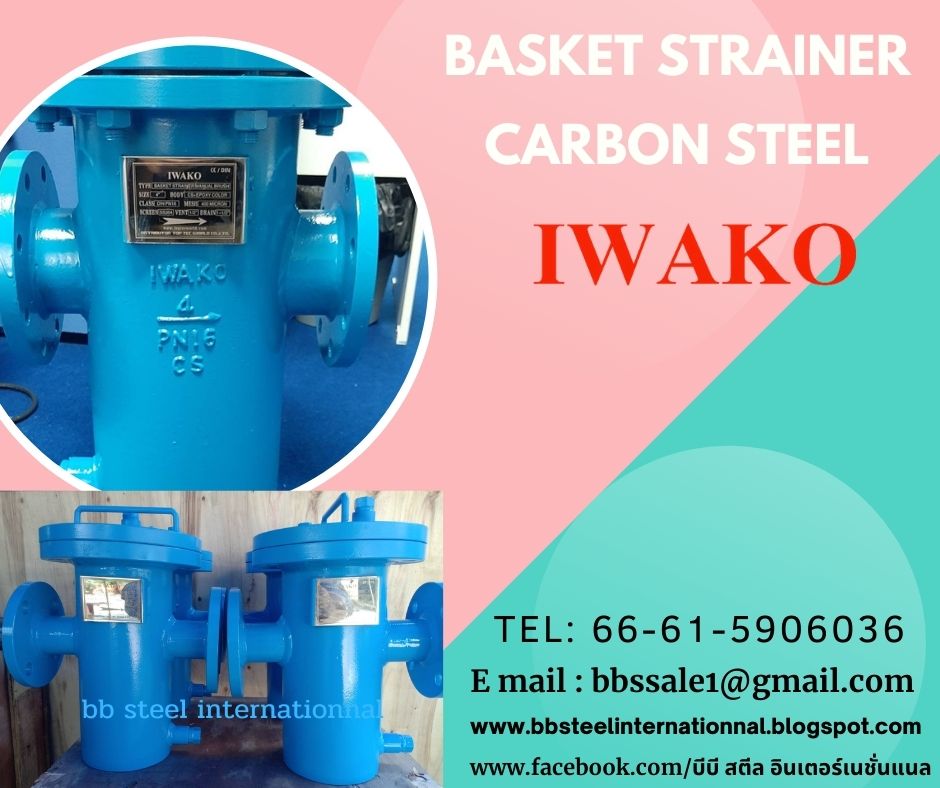
“IWAKO” Strainer filter suppliers : Basket Strainer , Handle Wheel Washing Basket Strainer , Automatic Basket Strainer , Automatic Backwash Strainer , Duplex Basket Strainer , Automatic Strainer Machine , Automatic Strainer Self-Cleaning , Automatic Self-Cleaning Water Filters, Automatic Backwash Drain Filter, Automatic Backwashing Strainer , Automatic Backflush Strainer , Automatic Water Strainer ,Hydrocyclone Separator Filter , T Strainer Filter , Y Strainer and Temporary filter.
Line ID : @bbsinter
Tel. 061-5906036
Author Profile

Latest entries
 level gaugeสิงหาคม 24, 2026Industrial Welding Pad Level Gauge Supplier “IWAKO”
 level gaugeสิงหาคม 21, 2026Water Liquid Level Gauge Cock Stainless Steel “IWAKO”
 strainer filterสิงหาคม 17, 2026Automatic water filter used for water treatment
 strainer filterสิงหาคม 17, 2026Automatic self-cleaning filters IWAKO ระบบบำบัดน้ำเสียและน้ำบริสุทธิ์ที่โรงงานไว้วางใจ
